
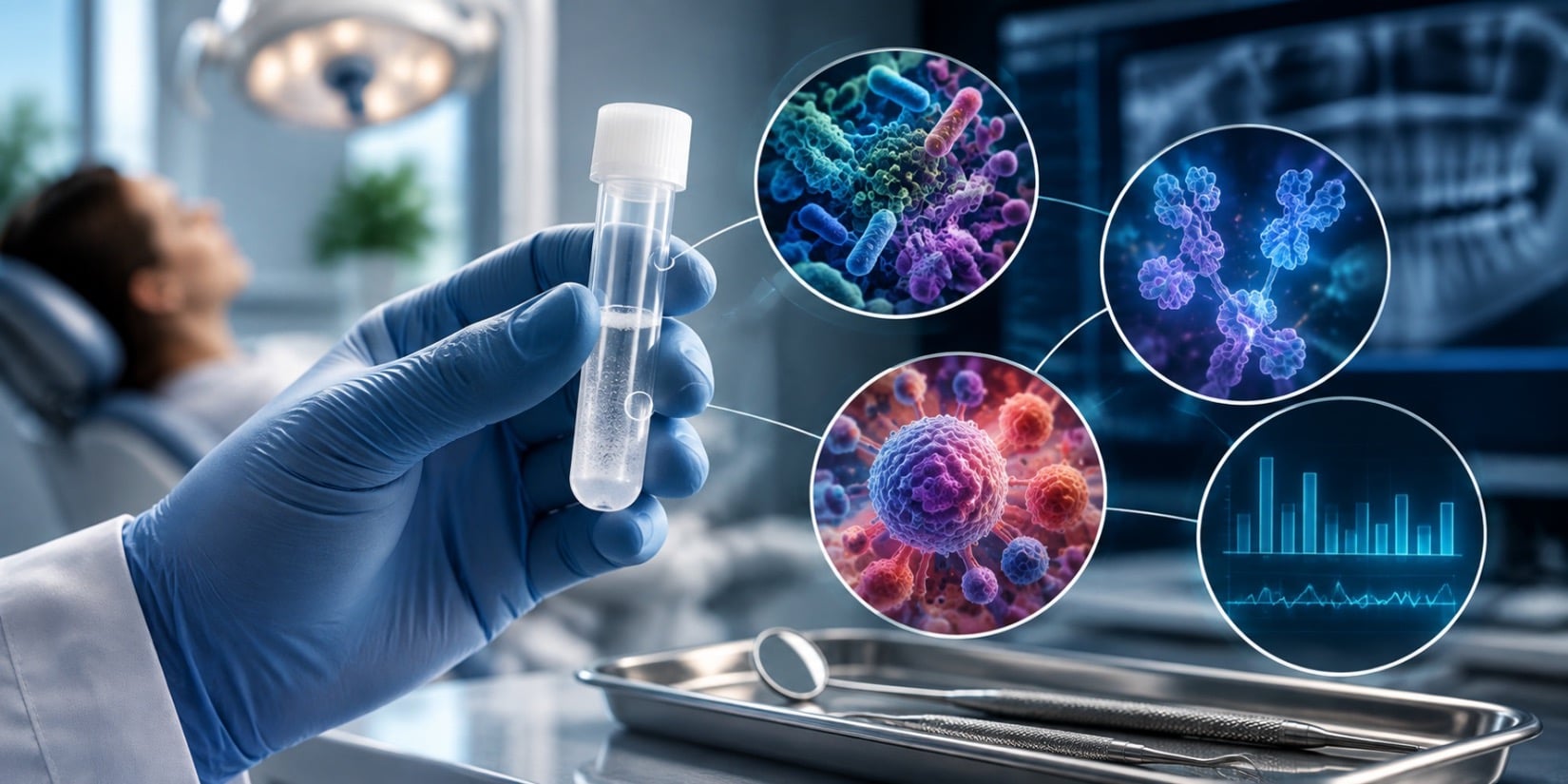
If you're responsible for implant patients, you already know what you're watching for during maintenance. Probing depths, bleeding, suppuration, tissue changes, radiographic bone levels and other clinical findings all help you determine what's happening around an implant.
What interests me is whether we're getting better at seeing another layer of the picture. Can biological information help identify changes in the peri-implant environment before those changes become an obvious clinical problem?