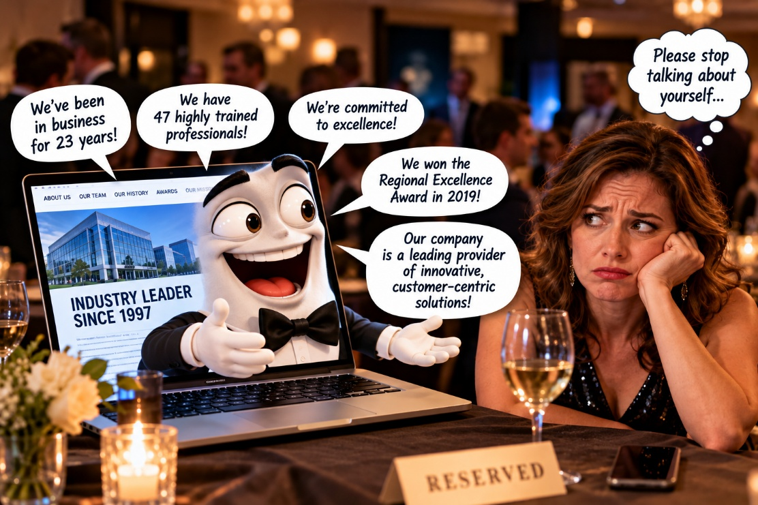
Have you ever been trapped at a party talking to someone who simply WILL NOT SHUT UP about themselves? They tell you where they went to college. How successful they are. How many awards they've won. How wonderful their children are. How their company is the industry leader in whatever it is they do.
Read More
Topics:
beautiful website,
corporate autobiography,
fancy graphics,
Fancy animations
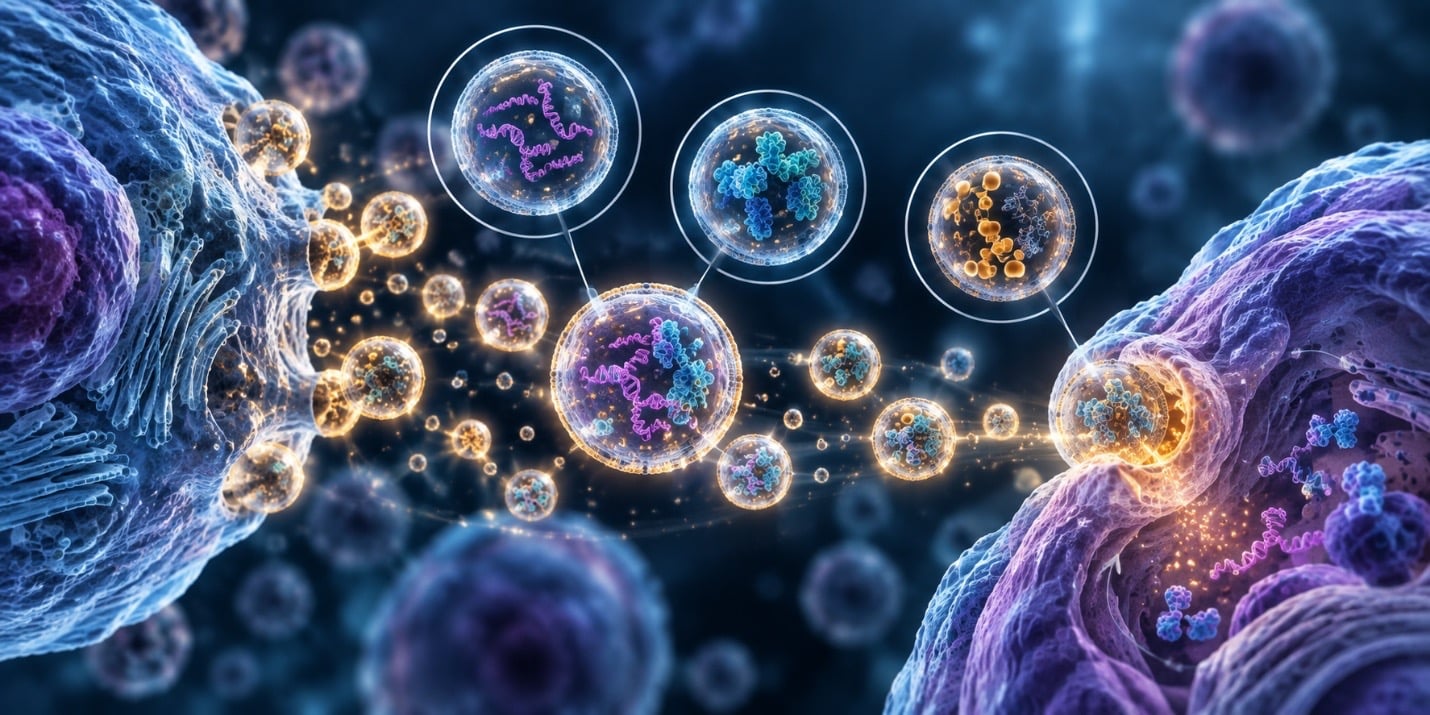
If you've spent any time around regenerative medicine lately, you've heard about exosomes. They're being discussed in orthopedics, dermatology, wound healing, aesthetics and, increasingly, dentistry.
Whenever something attracts this much attention this quickly, I become interested for two reasons. I want to know what's genuinely exciting about the science, and I want to know where the science ends and the marketing begins.
Read More
Topics:
Biology in Dentistry,
regenerative medicine,
biological communication,
EXOSOMES INTERSECT
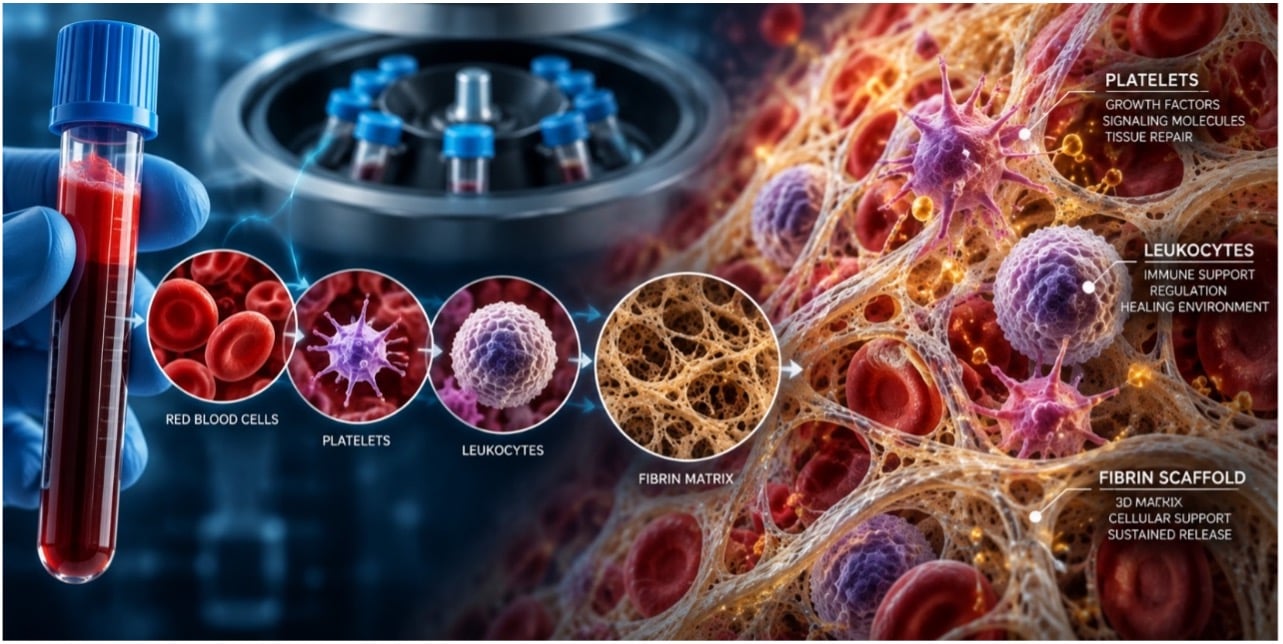
Platelet-rich fibrin certainly isn't new to dentistry. If you're placing implants or performing regenerative procedures, there's a good chance you've either used PRF yourself or followed its evolution over the years.
What interests me is how far the conversation has moved beyond simply concentrating something useful from the patient's own blood. The questions now being asked are about how that biology is captured, organized, delivered and sustained long enough to matter.
Read More
Topics:
platelet-rich,
regenerative material,
captured, organized
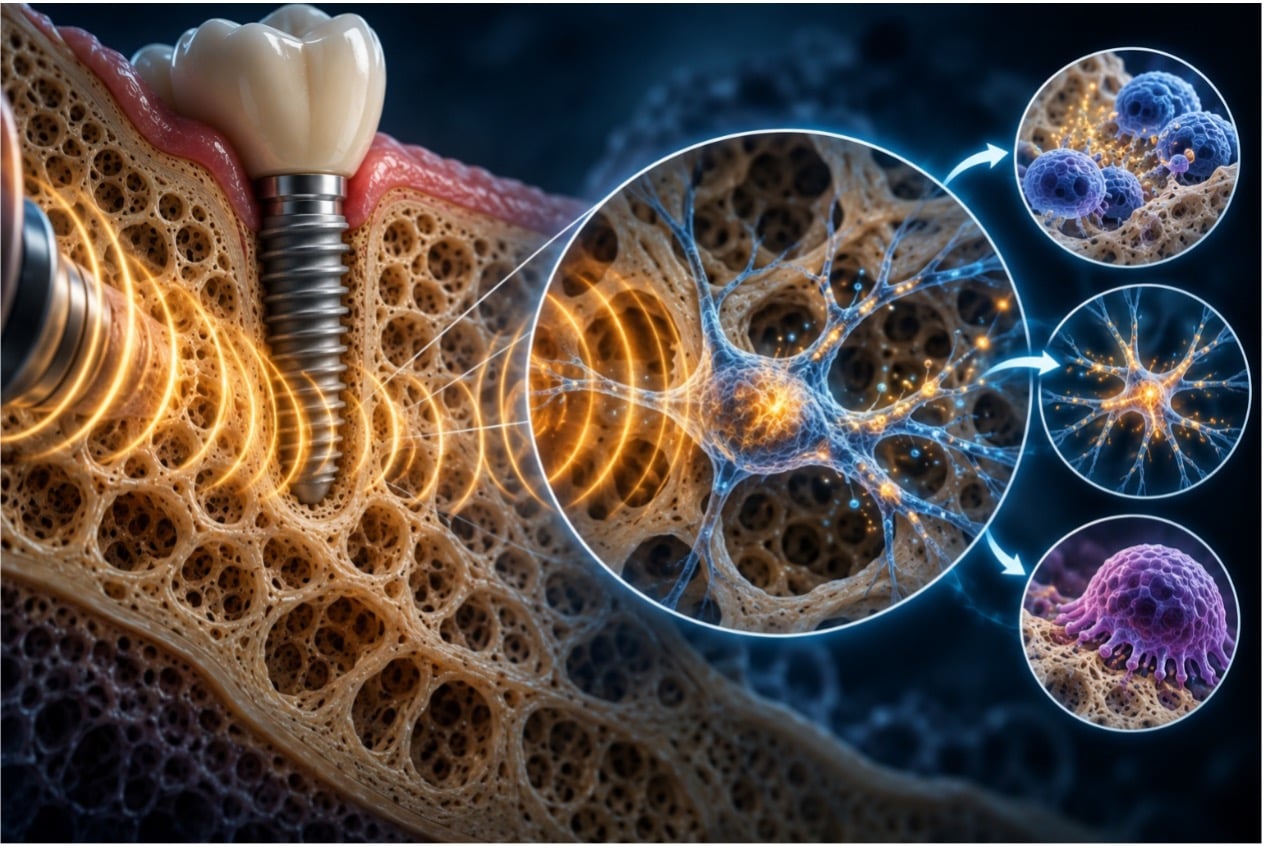
Here's something I've learned while digging into implant biology that initially sounded almost contradictory.
We know excessive micromotion can interfere with osseointegration. Yet researchers are also investigating whether the right kind of controlled mechanical stimulation might actually support some of the biological processes involved in bone formation and healing.
Read More
Topics:
excessive micromotion,
BONE RESPONDS,
biochemical signals,
biological environment
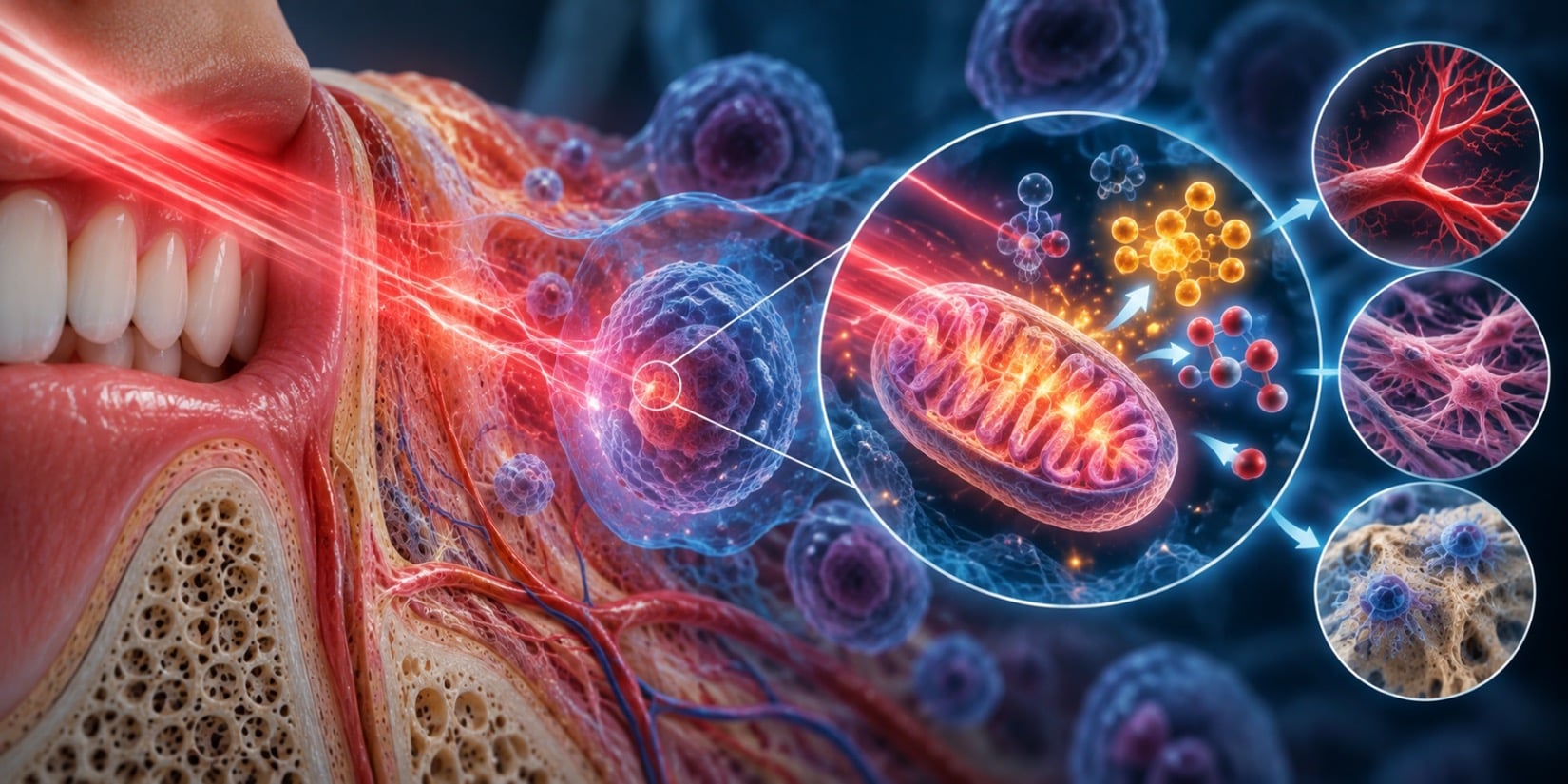
I'll admit that when I first heard about using red and near-infrared light in connection with dental implant healing, I was skeptical. “Red light therapy” is one of those phrases that has become so common in consumer wellness that it's easy to dismiss it before looking at the biology behind it.
Then I started learning about photobiomodulation, or PBM. What caught my attention wasn't the device or the light itself, but what researchers are investigating at the cellular level.
Read More
Topics:
mitochondrial activity,
PBM theoretically,
Red light therapy,
Photobiomodulation,
implant surgery
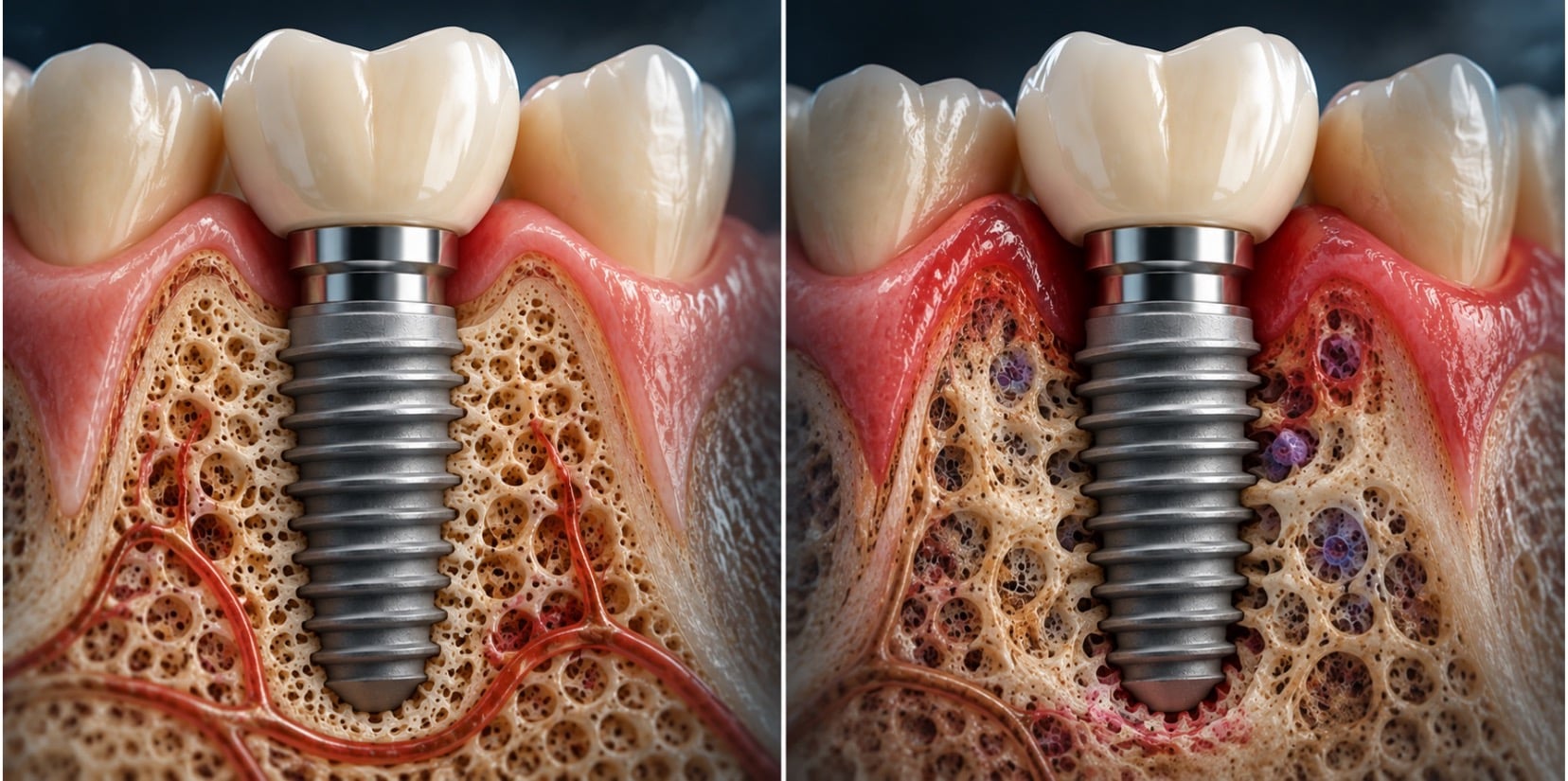
If you maintain dental implants, I don't need to tell you that biofilm matters. You already understand the relationship between microbial burden, inflammation and peri-implant disease far better than I ever will.
What I've found interesting as I've dug deeper into implant biology is that the conversation is becoming much more nuanced than “bacteria are bad.” Increasingly, the focus is on the interaction between the microbial community, the host response and the environment surrounding the implant.
Read More
Topics:
microbial community,
biofilm matters,
periodontal history
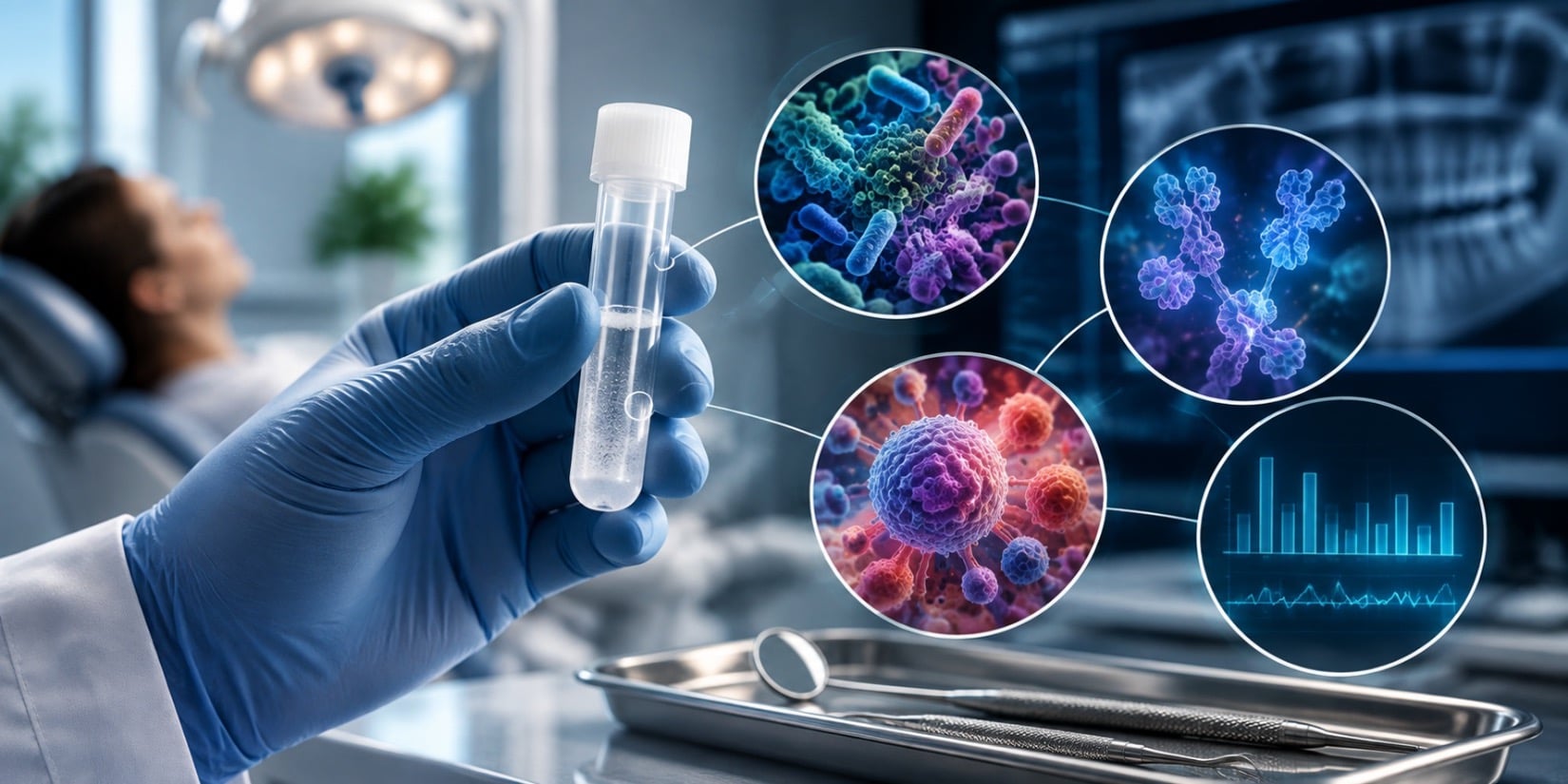
If you're responsible for implant patients, you already know what you're watching for during maintenance. Probing depths, bleeding, suppuration, tissue changes, radiographic bone levels and other clinical findings all help you determine what's happening around an implant.
What interests me is whether we're getting better at seeing another layer of the picture. Can biological information help identify changes in the peri-implant environment before those changes become an obvious clinical problem?
Read More
Topics:
MICROBIOME,
Biology in Dentistry
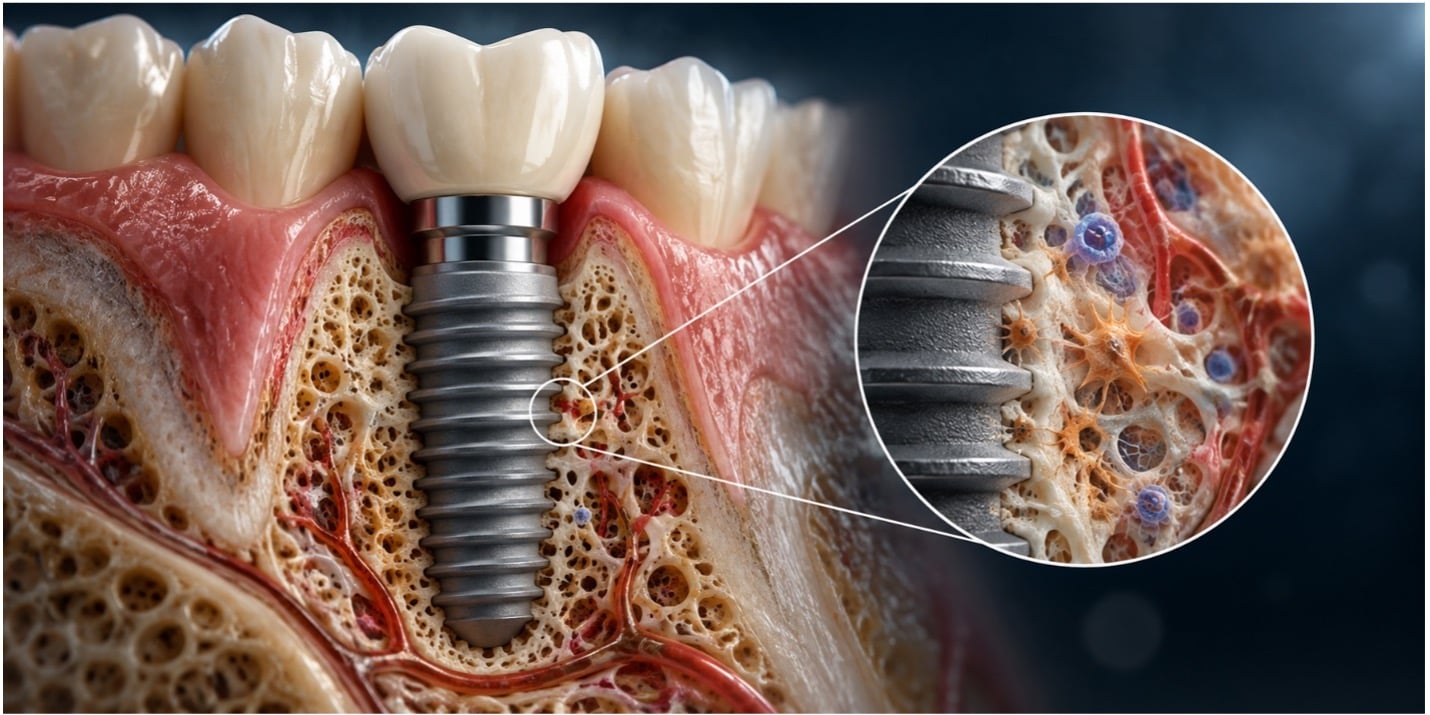
If you place implants, you already understand osseointegration. I'm certainly not going to attempt to explain it to you.
What interests me—and what became very personal after experiencing multiple implant failures—is something different.
Read More
Topics:
osseointegration,
biological process
I've had multiple dental implants fail, and I want to tell you something important about the dentist who placed them. I believe he is one of the most competent dentists in the world, I trust his skill completely, and I know he wanted those implants to succeed every bit as much as I did.
Read More
Topics:
biological process,
primary stability,
mechanical stimulation,
Dental Summit
There is a romantic version of copywriting that I find very entertaining.
The brilliant copywriter sits alone in a dimly lit room, perhaps wearing an unnecessarily expensive sweater, waiting for inspiration. Suddenly, the perfect idea arrives, brilliant words pour onto the screen, and a few hours later an irresistible sales campaign exists.
I have been in marketing for a long time, and I have some disappointing news. Most great copy involves considerably less divine inspiration and considerably more digging around.
Read More
Topics:
Sales conversations,
Strategic Growth Session,
high-quality products,
objections, and interviews