
Biology in Dentistry
Implant Success Starts Before Surgery—and Depends on What Happens After.
You plan the placement. You select the implant. But what is happening in the mouth that will receive it? The condition of the gums and supporting bone, the patient's health, and the way healing is monitored all deserve attention alongside the procedure itself.
When an implant fails, the impact reaches beyond the treatment site. Your patient may face another procedure. Your team faces additional appointments and difficult conversations. Your practice may absorb extra costs and questions about how the case was assessed, explained, and managed.
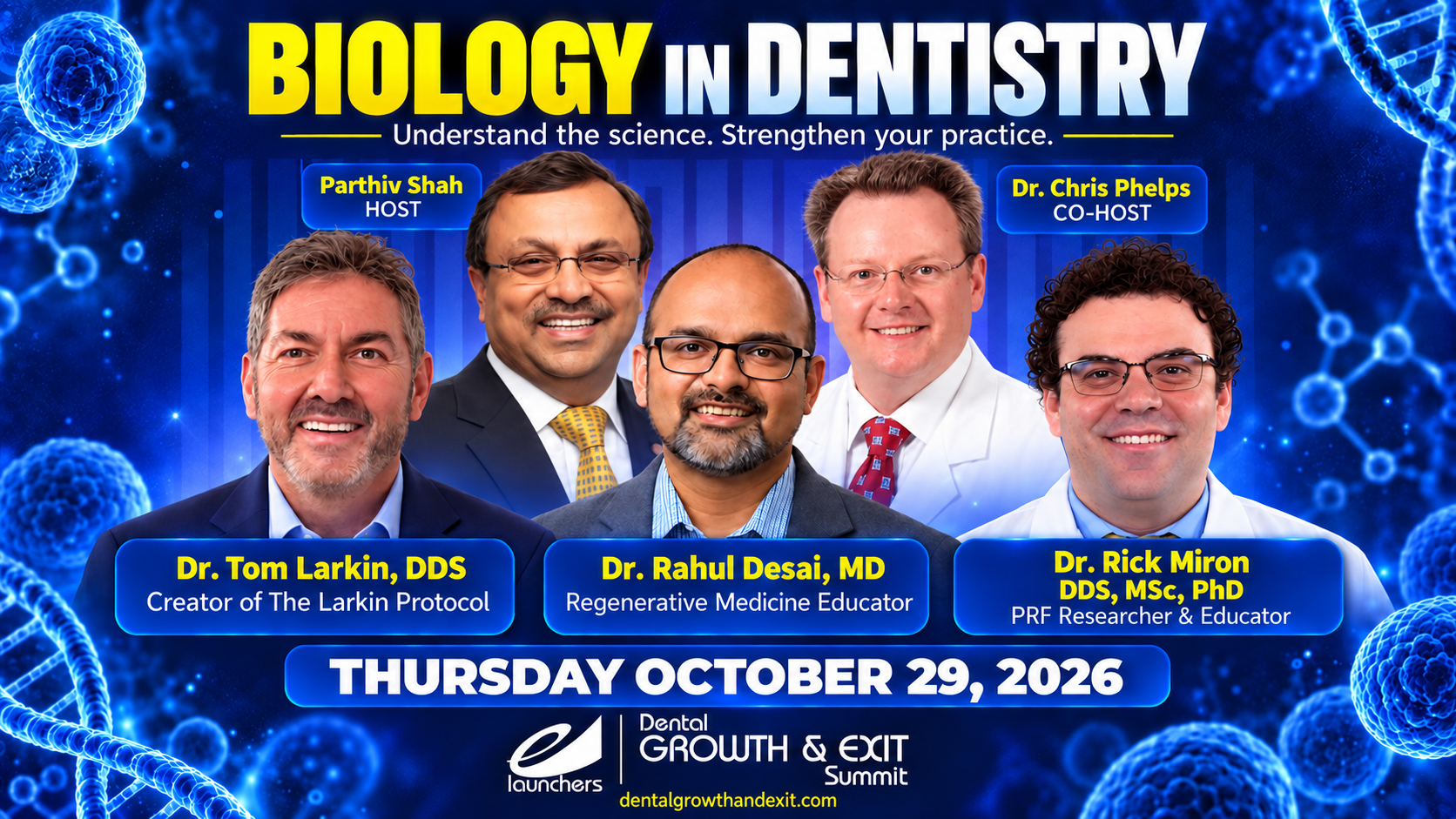
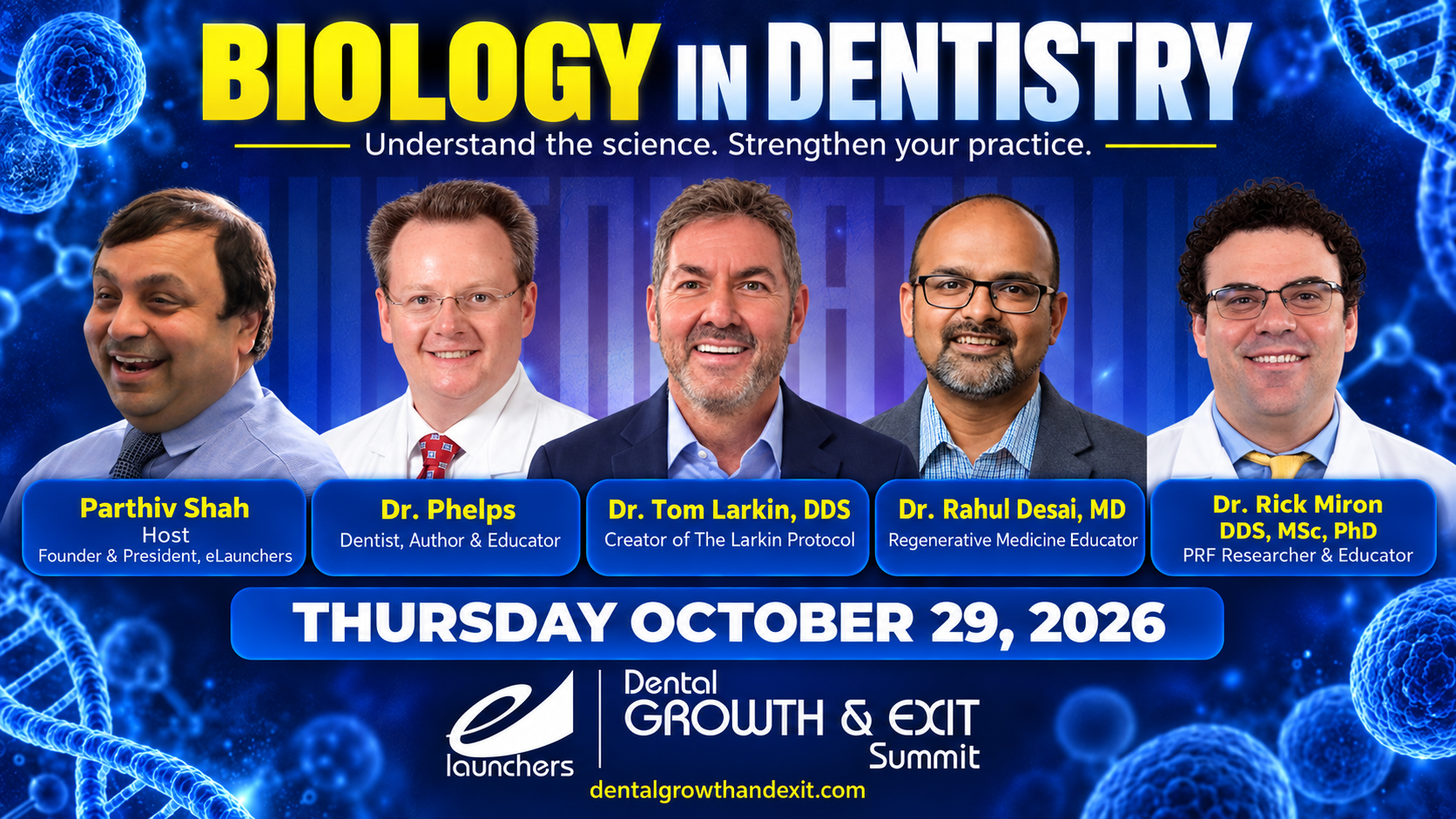
Join Parthiv Shah, Dr. Tom Larkin, Dr. Rahul Desai, Dr. Rick Miron, and Dr. Christopher Phelps on October 29 for a closer look at the biology surrounding implant care. Explore preparation, regenerative approaches, healing technologies, and maintenance with a clear goal: make better decisions for your patients and your practice.
The Mouth You Operate In Matters. So Does the Care That Follows.
An implant becomes part of a living environment. Before surgery, that means looking carefully at periodontal health, local infection, oral hygiene, and patient factors that may affect recovery. After placement, the work continues through tissue healing, integration with bone, and long-term follow-up.
An implant can encounter problems early or years later. A complete approach asks what should be assessed before treatment, what needs attention during recovery, and how the patient will maintain the result over time.
When a Case Goes Wrong, Your Decisions Come Under Scrutiny.
A complication can lead to a complaint or an allegation of malpractice. An adverse outcome alone does not establish negligence. Clear assessment, informed consent, documentation, and follow-up help make the reasoning behind care visible.
Bring that level of attention to the clinical questions explored at this summit. Where might your current process need improvement? What deserves closer monitoring? Which new ideas have enough evidence to justify a place in your practice?
Understand the Mouth. Evaluate the Science. Make the Investment Count.
Join four clinical educators and your host for a conversation connecting implant biology with the decisions you make every day.
Dr. Tom Larkin — The oral environment, biological monitoring, and ongoing implant maintenance.
Dr. Rick Miron — PRF and the expanding research conversation around exosomes and regeneration.
Dr. Christopher Phelps — The science of vibration and its potential role in healing and osseointegration.
Dr. Rahul N. Desai — Photobiomodulation, host response, and a protocol-based approach to perioperative care.
Parthiv Shah — The practice owner's perspective on communicating value and making thoughtful investments.
From the first assessment to the maintenance visit, each decision contributes to the patient experience. Explore the questions that help connect those decisions into a more consistent approach to care.
Reserve Your Place at Biology in Dentistry


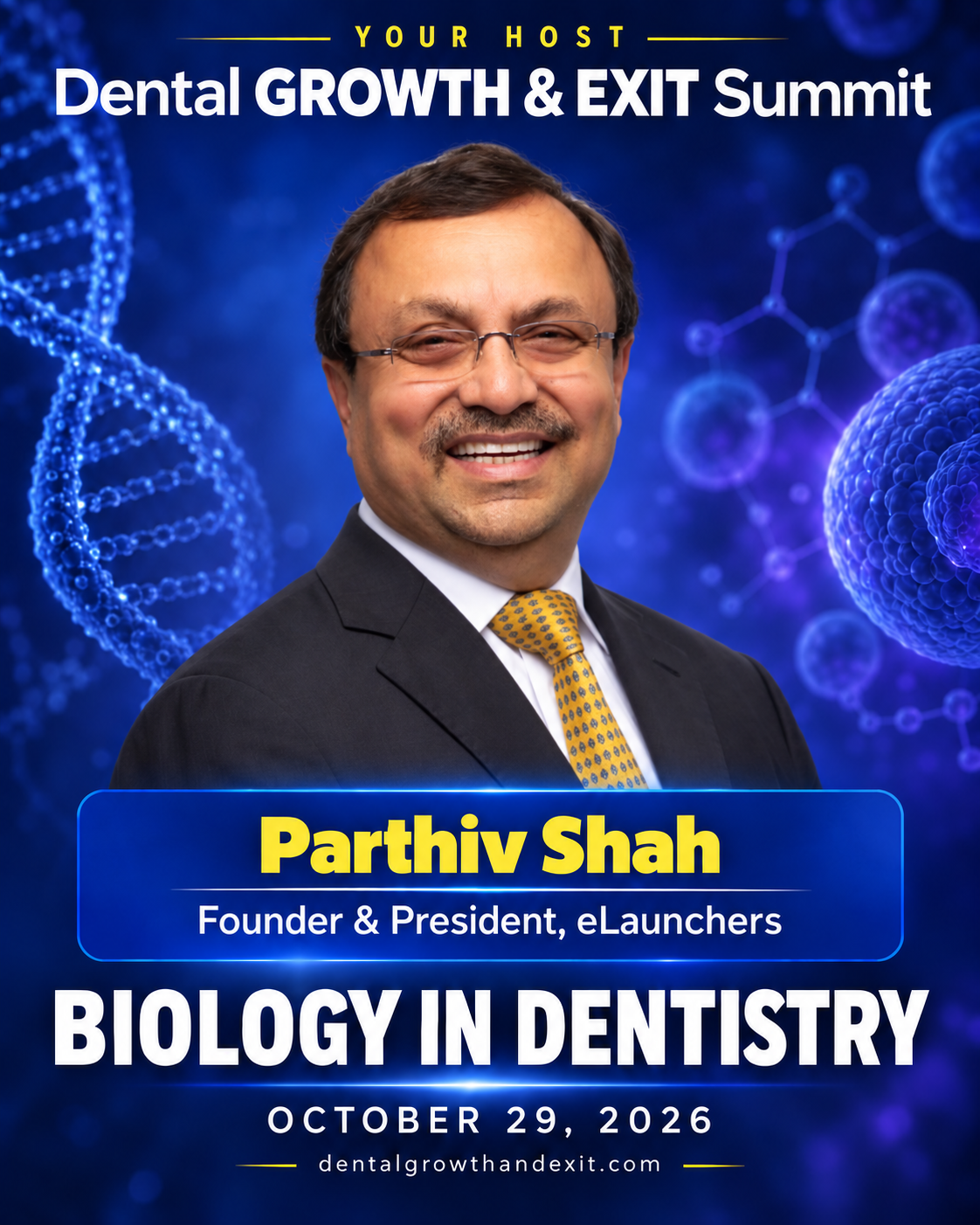
YOUR HOST
Parthiv Shah
Founder & President, eLaunchers
Make Better Care Part of a Stronger Practice.
Every new protocol brings a practice decision with it. What training will your team need? How will you explain the value to patients? What will it cost to implement, and how will you know whether the investment is delivering?
As your host, Parthiv connects the clinical conversation to the realities of practice ownership. The focus is on understanding the full cost of care, communicating responsibly, and making decisions that support patient trust and a sustainable business.
Parthiv Shah is the Founder and President of eLaunchers, a marketing firm serving dentists, physicians, and other business owners. An author and speaker, he brings experience in direct-response marketing, technology, and the systems that help businesses stay connected with their audiences.
Invest with a clear purpose—and a way to measure the result.
Meet the Speakers Exploring the Biology Behind Implant Care
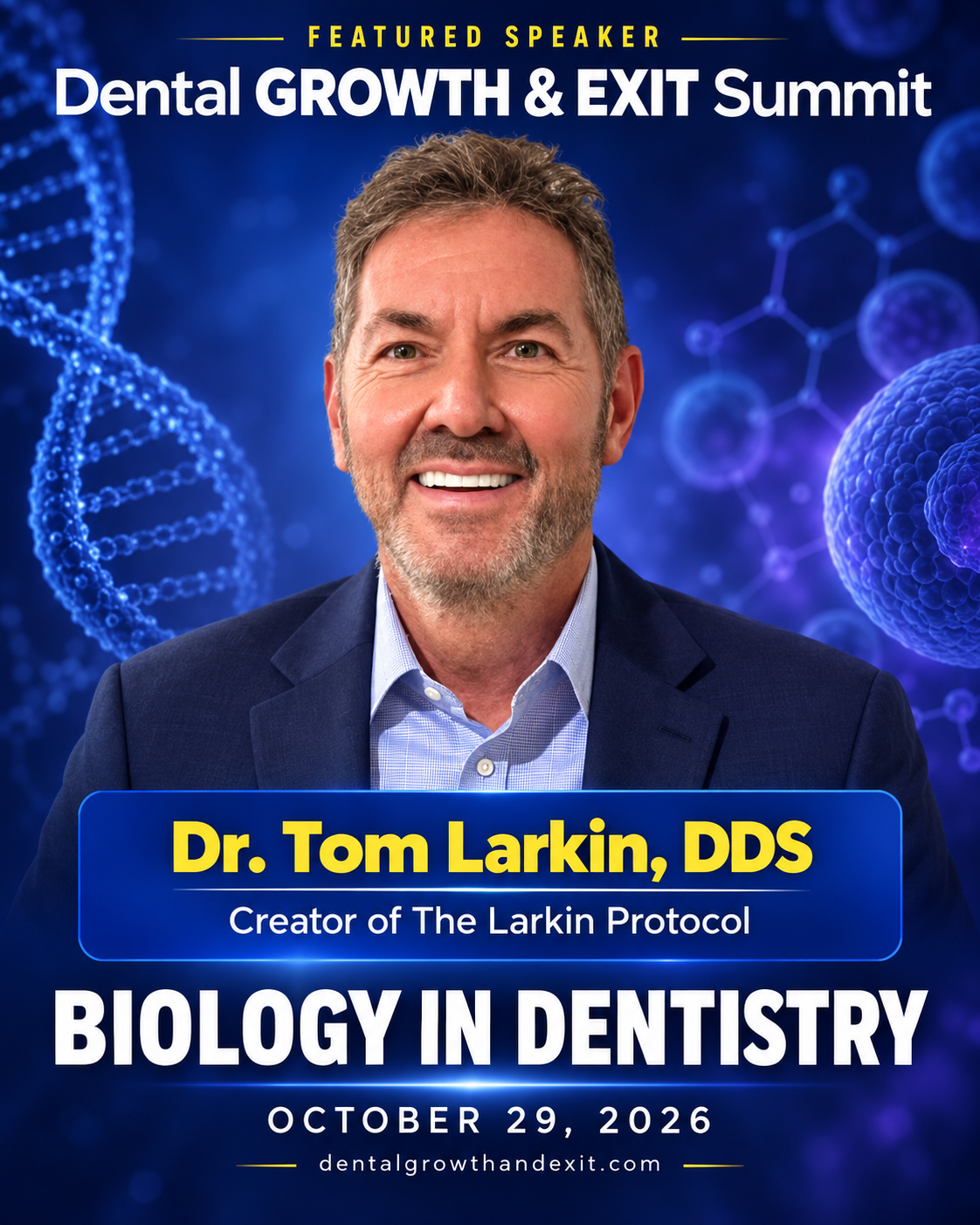
Dr. Tom Larkin, DDS
Creator of The Larkin Protocol
What Is Happening Around the Implant?
Before placement, the mouth already has a history. After surgery, that environment continues to change. Dr. Larkin's work brings attention to microbial balance, inflammation, patient education, and the ongoing observation of tissues around teeth and implants.
Explore how testing and maintenance fit into a broader assessment of implant health. Consider where biological information may inform a clinical decision, how to explain findings to patients, and how to keep follow-up consistent as patients move from surgery into everyday life.
The question continues after the restoration is delivered: what will your team monitor, what will the patient do at home, and how will you respond when something changes?
From the IAOCI speaker biography
“Dr. Thomas Larkin is a dentist, educator, and internationally recognized speaker known for pioneering biologically focused periodontal and implant maintenance protocols.”
Give implant maintenance the same attention you give implant placement.
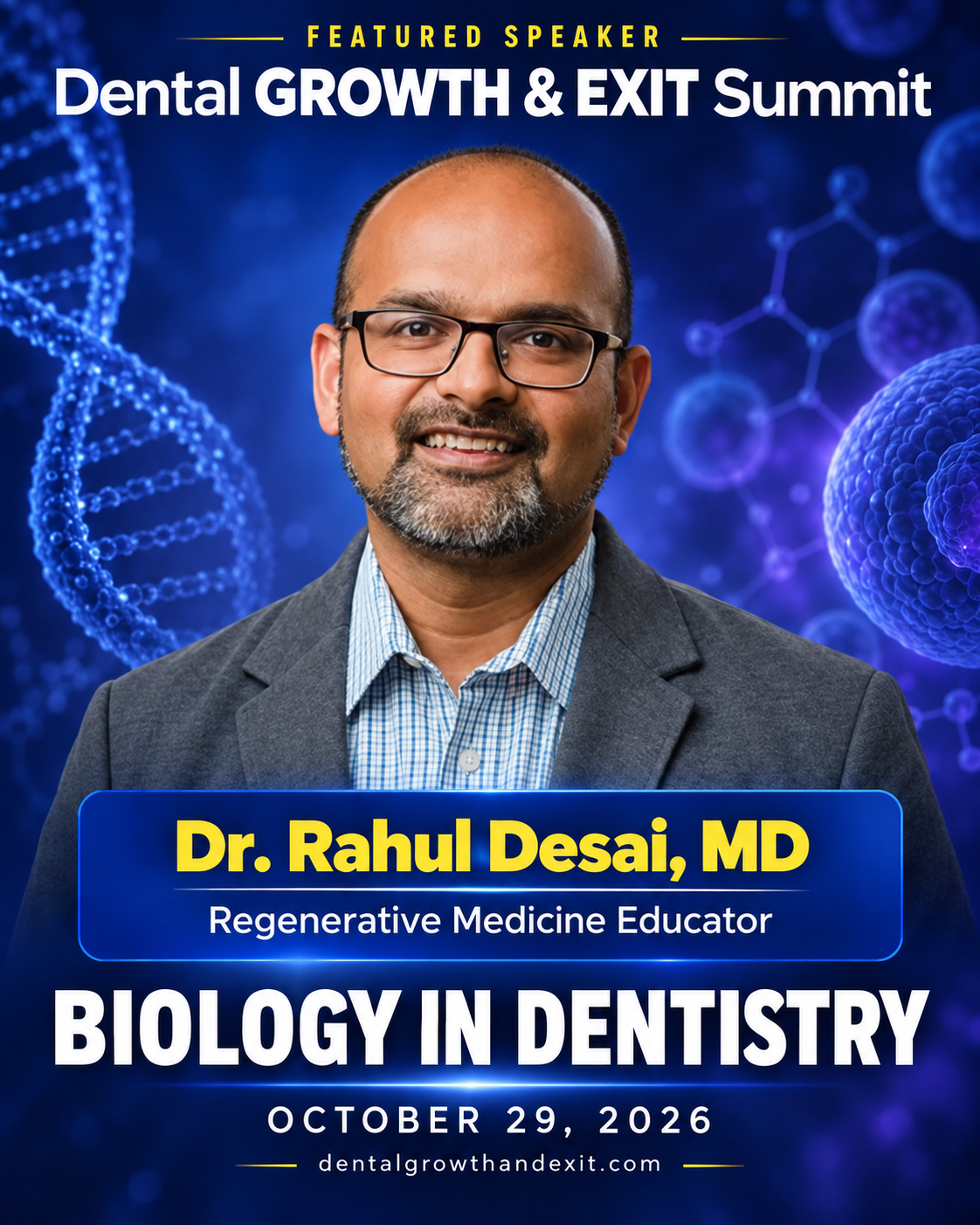
Dr. Rahul N. Desai, MD
Chief Scientific Officer, Redvive Health
Light, Bone, and Bioceramics: A Protocol-Based Approach to Healing & Host Optimization
What makes a healing protocol more than a device added to the treatment room? Timing, patient selection, treatment parameters, and a clear reason for using it.
Dr. Desai's topic examines photobiomodulation, the use of red and near-infrared light, and its potential role around implant surgery. Explore how this approach is being considered across tissue preparation, early recovery, and the period in which bone integrates with the implant.
Connect the discussion of light and biomaterials to the patient receiving treatment. Consider the evidence, practical limits, patient participation, and the documentation needed to evaluate a protocol consistently.
From the IAOCI speaker biography
“Dr. Rahul N. Desai is a former practicing musculoskeletal radiologist with nearly two decades of clinical experience.”
Understand the protocol before investing in the technology.
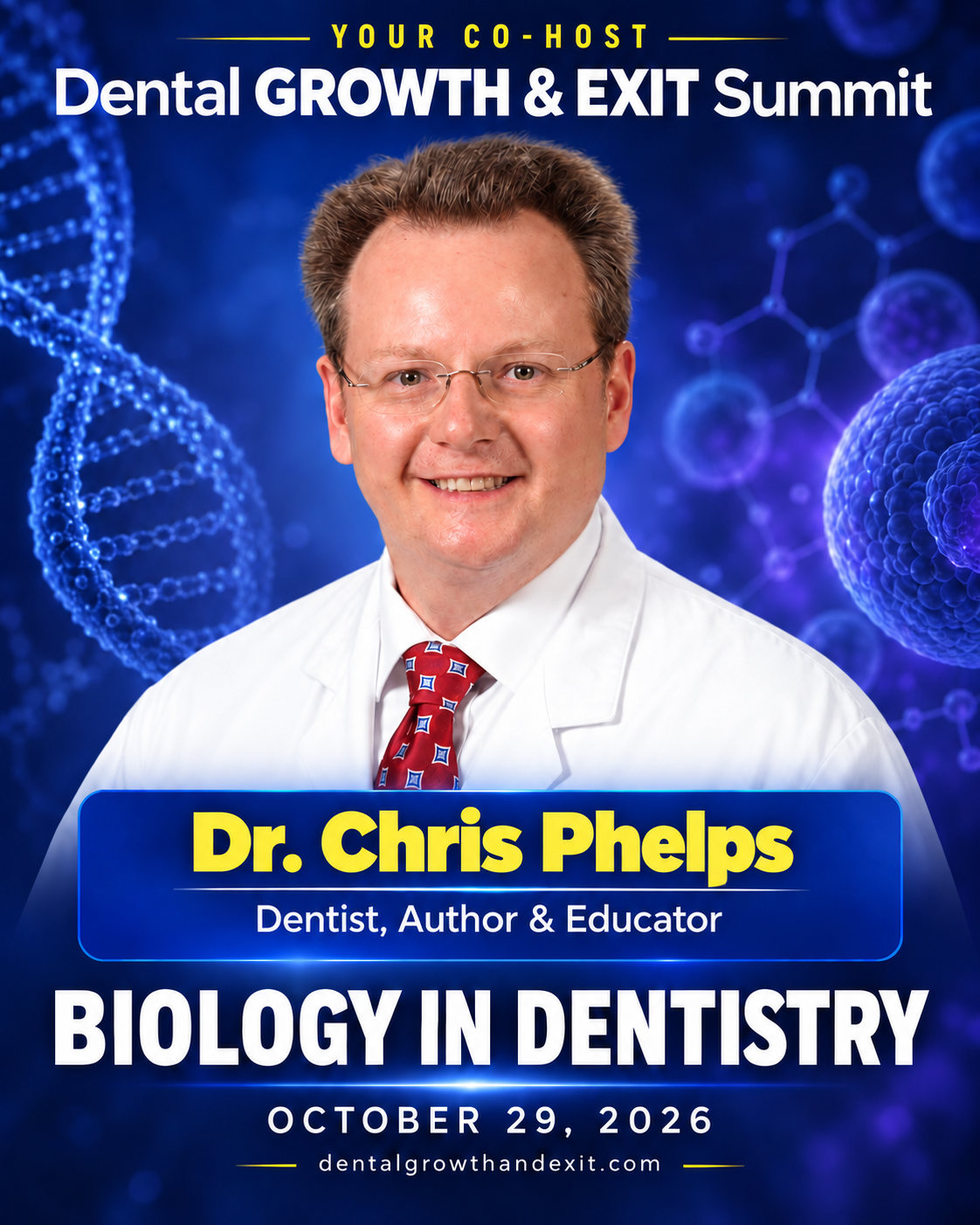
Dr. Christopher Phelps, DMD, CMCT
Dentist, Entrepreneur & Educator
The Science of Vibration: Enhancing Healing and Osseointegration in Implant Dentistry
What role might controlled mechanical stimulation play as bone heals around an implant?
Dr. Phelps's topic examines low-magnitude, high-frequency vibration and the biological pathways researchers are studying in relation to bone remodeling and tissue recovery. Explore the proposed mechanisms, the difference between preclinical findings and patient outcomes, and the questions that remain.
For a practice considering vibration technology, the discussion also has a practical side: which applications have support, what would implementation involve, and how should results be evaluated? Use the science to guide the purchasing conversation and keep patient expectations realistic.
From the IAOCI speaker biography
“He currently practices in Charlotte NC and is the founder and president of Golden Goose Scheduling, The Phelps Institute and the Chairful Dentist.”
Examine the evidence behind the technology before deciding where it belongs.
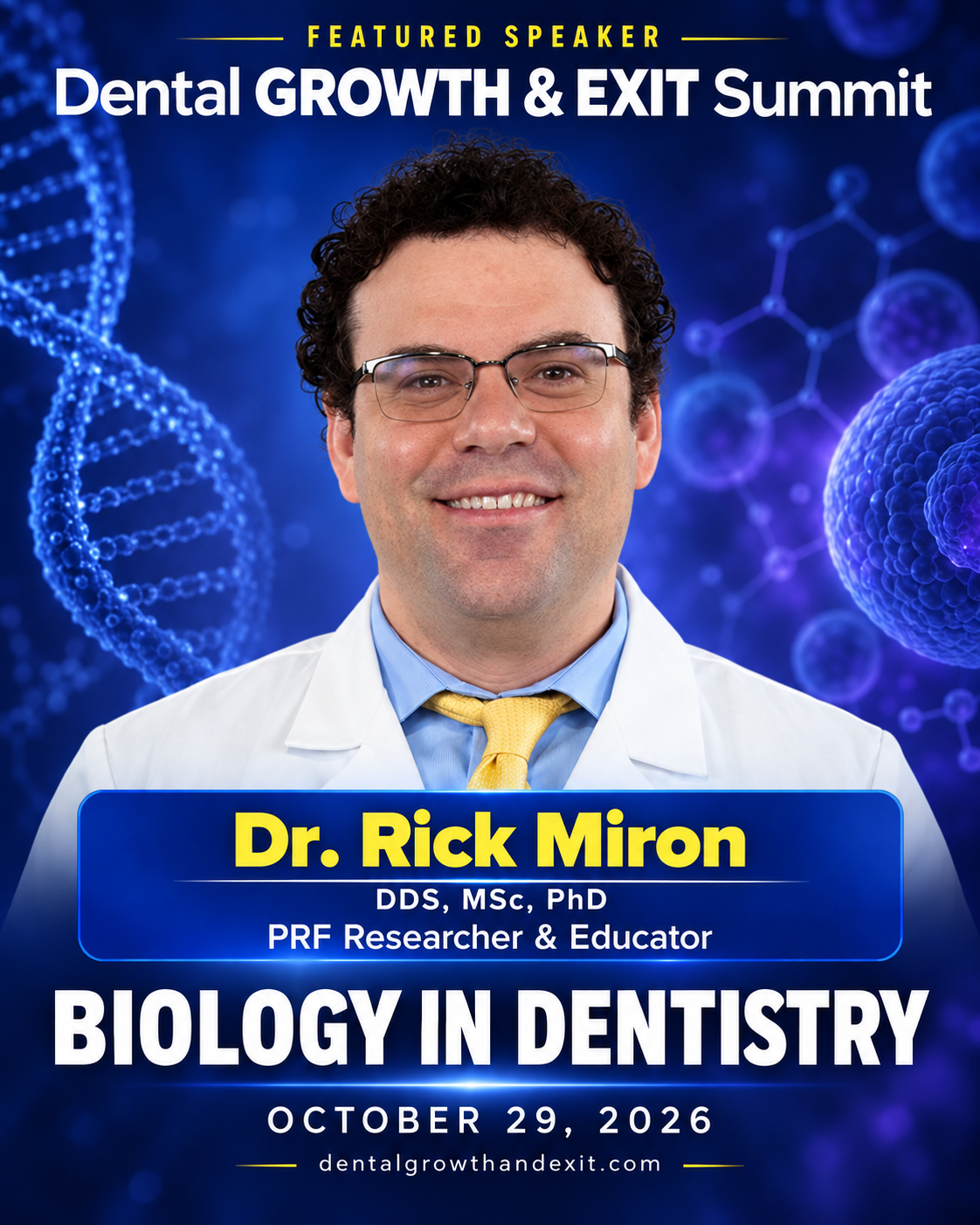
Dr. Richard “Rick” Miron, DDS, MSc, PhD
PRF Researcher & Educator
PRF and PRP: Understand the Biology Behind the Preparation.
Platelet-rich fibrin and platelet-rich plasma bring the patient's own blood components into the regenerative conversation. PRP concentrates platelets in plasma. PRF preparations can provide a fibrin framework. How they are prepared and where they are used matter.
Explore the questions behind their use around implant treatment: what does the evidence show for a particular application, how do preparation methods differ, and what should a patient reasonably expect? Dr. Miron's PRF research provides a foundation for this discussion.
PRF, Exosomes and the Future of Regenerative Medicine/Dentistry
Exosomes are drawing interest because of their role in communication between cells. For clinicians, the opportunity is to understand the research while examining its limits.
Consider what emerging findings could mean for regenerative dentistry, what still needs clinical validation, and how safety and regulatory requirements shape responsible next steps. Exosome therapies remain an investigational topic. This discussion is an opportunity to learn, not a recommendation to add them to routine care.
From the IAOCI speaker biography
“Dr. Richard Miron is currently lead educator and researcher at Advanced PRF Education…”
Understand what a regenerative approach can support—and what the evidence has yet to establish.
Before Surgery. During Healing. Long After Placement.
Look at implant care as a continuous process, with a clear purpose for each stage.
Before surgery
What do you know about the tissues, supporting bone, medical history, and risk factors of the person in your chair? What needs attention before moving ahead, and how will you explain the plan?
During healing
What will you monitor? How will you assess whether an adjunct is appropriate? What does the patient need to understand about recovery and contacting the practice when something feels wrong?
Long-term maintenance
How will patients stay connected to follow-up? What findings will you track over time? How will your team make maintenance a consistent part of the treatment relationship?
Bring your own clinical and implementation questions. Leave with priorities to examine with your team: what to assess, what to document, what to study further, and where a more consistent process could make a difference.
Dental Growth & Exit Newsletter
Better Decisions for Your Patients and Your Practice.
Stay connected to ideas about patient communication, practice systems, thoughtful investment, and long-term value. The Dental Growth & Exit Newsletter brings the owner's perspective to the decisions that shape your practice, so you can keep improving the business behind the care.

A Failed Implant Can Cost More Than Another Procedure.
The financial impact can include additional appointments, replacement materials, staff time, and adjustments to an already busy schedule. The patient carries a cost too: more treatment, more uncertainty, and a result they did not expect.
That is why an investment discussion should look beyond the purchase price. What will training cost? Which patients might benefit? How strong is the evidence? How will you track complications, additional treatment, patient experience, and the full cost of delivering care?
Biology in Dentistry brings those questions together. Explore the oral environment, consider the science behind emerging approaches, and decide what deserves closer evaluation in your practice.
Join Parthiv Shah, Dr. Tom Larkin, Dr. Rahul Desai, Dr. Rick Miron, and Dr. Christopher Phelps on Thursday, October 29, 2026.
Spend Wisely on Better Care Today. Work Toward Fewer Avoidable Complications Tomorrow.
A Clearer View of the Science. A Better Basis for Your Next Investment.
You have choices about where to spend your money and your team's time. Use this summit to examine the clinical purpose, supporting evidence, and practical demands behind those choices. A useful investment has a defined role in patient care and a meaningful way to evaluate its value.
Invest in the Right Protocols. Aim for Fewer Failures. Protect Long-Term Value.
Spending money on care is a serious decision. So is accepting the recurring cost of a process that needs improvement. As you assess your next investment, put these three areas under the microscope.
1. PRF and PRP: Preparation, Training, and Appropriate Use
Evaluate the equipment, team training, and clinical purpose behind a platelet-concentrate protocol. Decide which applications merit further consideration and how you would measure the added value for patients. Treat exosome research as a subject for continued learning, separate from a purchase decision.
2. Vibration: Evidence Before Equipment
Examine the proposed role of vibration in healing, the maturity of the clinical evidence, and the demands of implementation. A new device should have a defined purpose and a plan for evaluating its use.
3. Light, Bone, and Bioceramics: A Coherent Approach
Consider photobiomodulation alongside material selection, patient factors, and follow-up. Assess the protocol as a whole: the rationale, appropriate parameters, staff training, patient participation, and ongoing costs.
Keep assessment and maintenance at the center of all three decisions. The goal is to reduce avoidable complications and failures. When better care prevents retreatment, it can also save chair time, materials, and money over the long run. Whether a particular investment achieves that value depends on the evidence, the patient, and how it is implemented.
Come ready to ask where your practice could improve and where your next dollar could do the most good. Join Biology in Dentistry on October 29 and give your clinical and financial decisions the attention they deserve.
Invest in Understanding. Invest Where the Evidence Supports It. Measure the Value Over Time.